GORE® Tri-Lobe Balloon Catheter
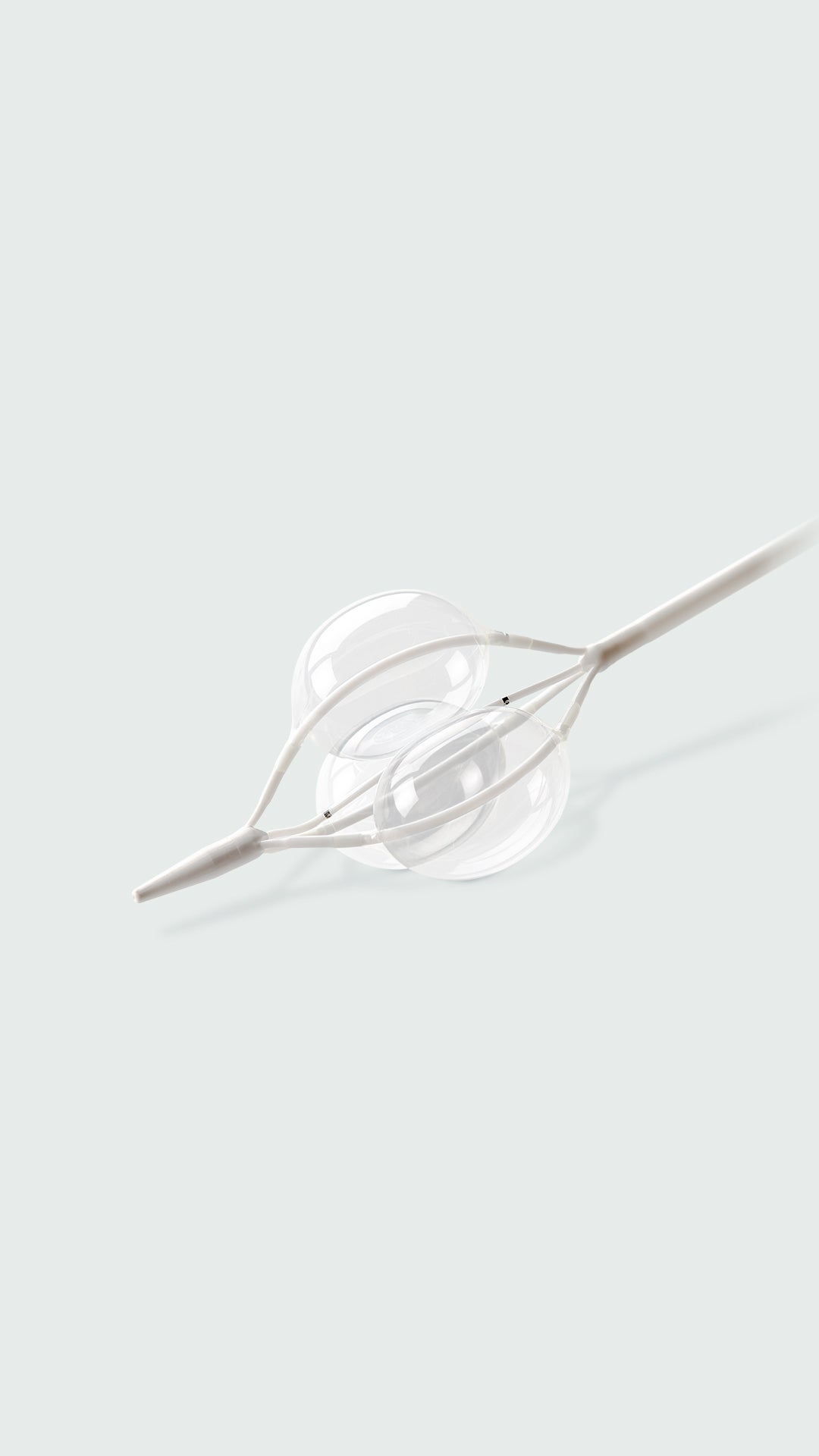
Continuous blood flow. Minimized potential for endoprosthesis movement.2
The GORE® Tri-Lobe Balloon Catheter provides surgeons with greater stability and control during positioning endovascular grafts.
The GORE® Tri-Lobe Balloon Catheter is engineered to facilitate endovascular procedures through several key features:
- Continuous blood flow: Rapid, uniform and simultaneous inflation and deflation with a unique design that allows flow around the lobes while inflated.
- Decreased hemodynamic pressure on the inflated balloons with approximately 80% of flow for distal perfusion.1
- Minimizes potential for endoprosthesis movement and blood pressure spikes post deployment due to significantly reduced hemodynamic pressures.2
The GORE® Tri-Lobe Balloon Catheter provides surgeons with higher degree of control during positioning endovascular grafts. Our innovative device is available in two sizes compatible with 18 Fr introducer sheaths. The small size is designed for 16–32 mm vessel diameters (for use with the GORE® TAG® Conformable Thoracic Stent Graft with ACTIVE CONTROL System or the GORE® EXCLUDER® AAA Endoprosthesis). The large size is designed for 26–48 mm vessel diameters (for use with the GORE® TAG® Conformable Thoracic Stent Graft with ACTIVE CONTROL System).
- Bloss R, Krall B. Balloon Testing on Pulse Duplicator. Flagstaff, AZ: W. L. Gore & Associates, Inc.; 2009. [Technology notebook]. 1088.
- Gendron M. Simulated Use Testing of Aortic Balloon Catheter for Design Verification – Final Amendment. Flagstaff, AZ: W. L. Gore & Associates, Inc; 2008. [Work plan]. MD39672.

Refer to Instructions for Use at eifu.goremedical.com for a complete description of all applicable indications, warnings, precautions and contraindications for the markets where this product is available. RXOnly
INDICATIONS FOR USE: The GORE® Tri-Lobe Balloon Catheter is indicated to facilitate in the endovascular repair of the thoracic or abdominal aorta due to lesions including aneurysms, dissections, trauma, and penetrating aortic ulcers.
CONTRAINDICATIONS: There are no known contraindications.