
Durable real-world outcomes in AV access
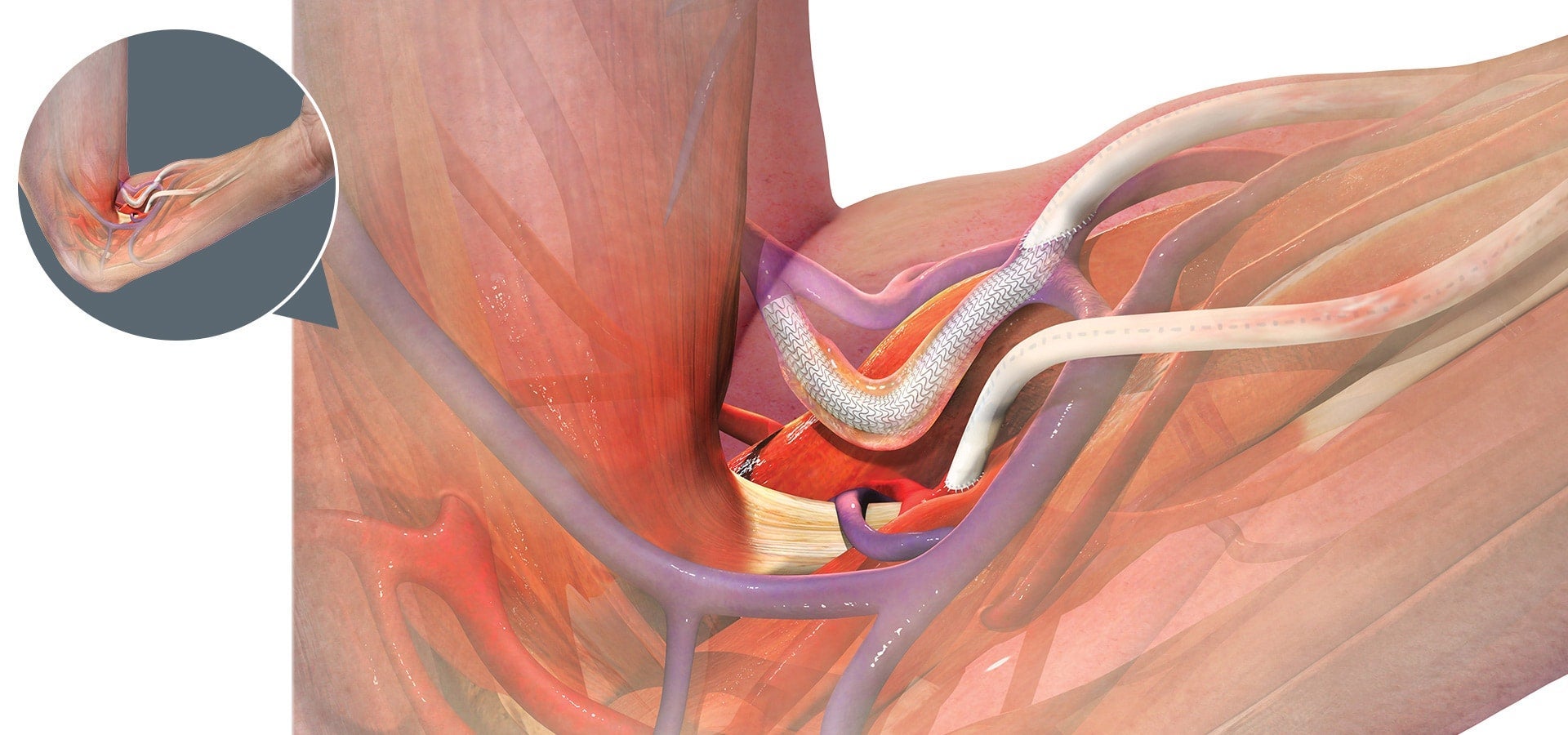
Treating stenosis or thrombotic occlusion at the venous anastomosis of synthetic arteriovenous (AV) access grafts1
Explore 6-month findings
Results from a prospective, real-world multicenter study of the GORE® VIABAHN® Endoprosthesis with Heparin Bioactive Surfacea,b from Japan show 94% secondary patency at 6 months.1 Watch the video to learn about the study details.
Primary patency at 6 months1
Target lesion
Access circuit
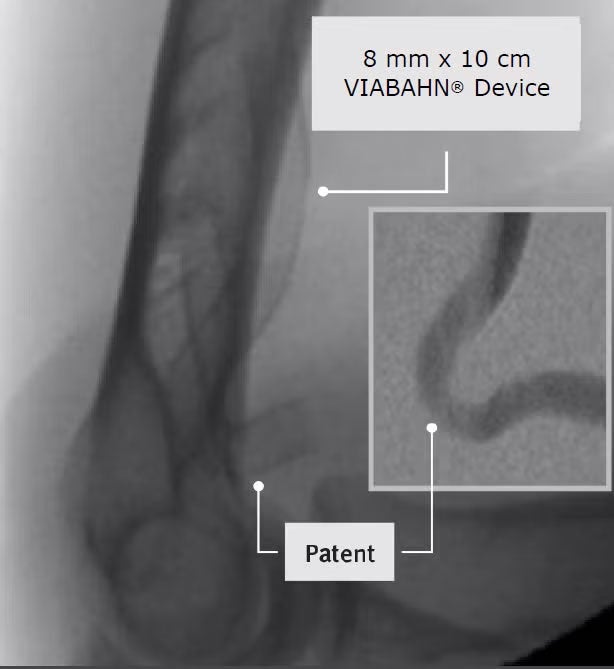
Target lesion primary patency with the VIABAHN® Device placed across the elbow
Secondary patency at 6 months1
Target lesion
Access circuit
Study patient and lesion characteristics
N = 103 patients
Female: 57%
Average age: 72 years
Average BMI (n = 76): 23 kg/m2
Diabetic: 40%
N = 105 lesions
Average length (N = 93): 43 mm
Thrombosed grafts treated: 23%
No statistical difference in target lesion primary patency with respect to1:
- Crossing the elbow
- Sex
- Number of prior interventions
- Diabetes
- Age of circuit
- Stent graft size and location
- Stenosis vs occlusion
- Elephant trunk placement (stent graft in the outflow vein lies without vessel wall apposition)
Sustained performance through 1 year2
Target lesion2
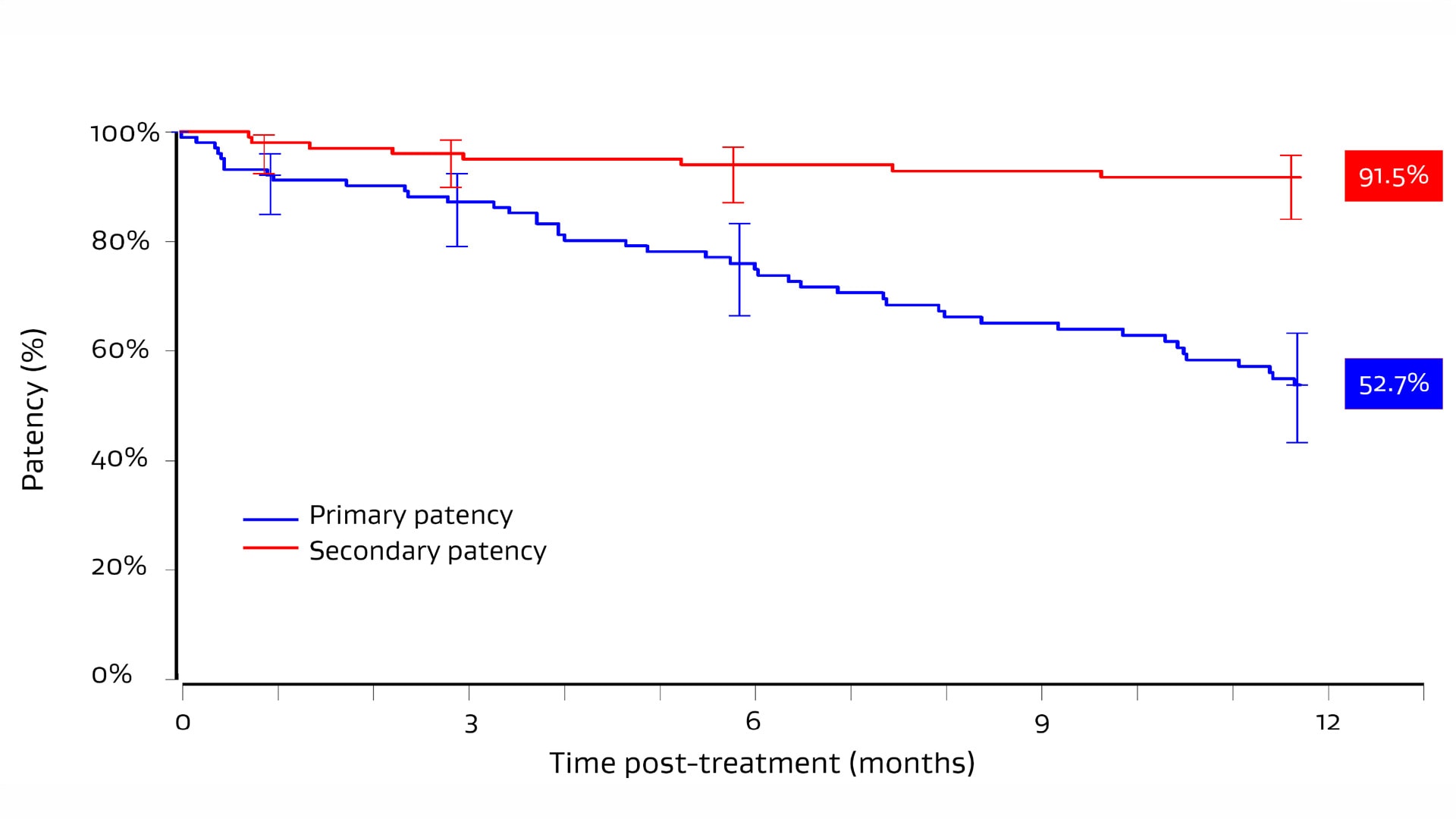
Kaplan-Meier estimates of target lesion primary and secondary patency.
Access circuit2
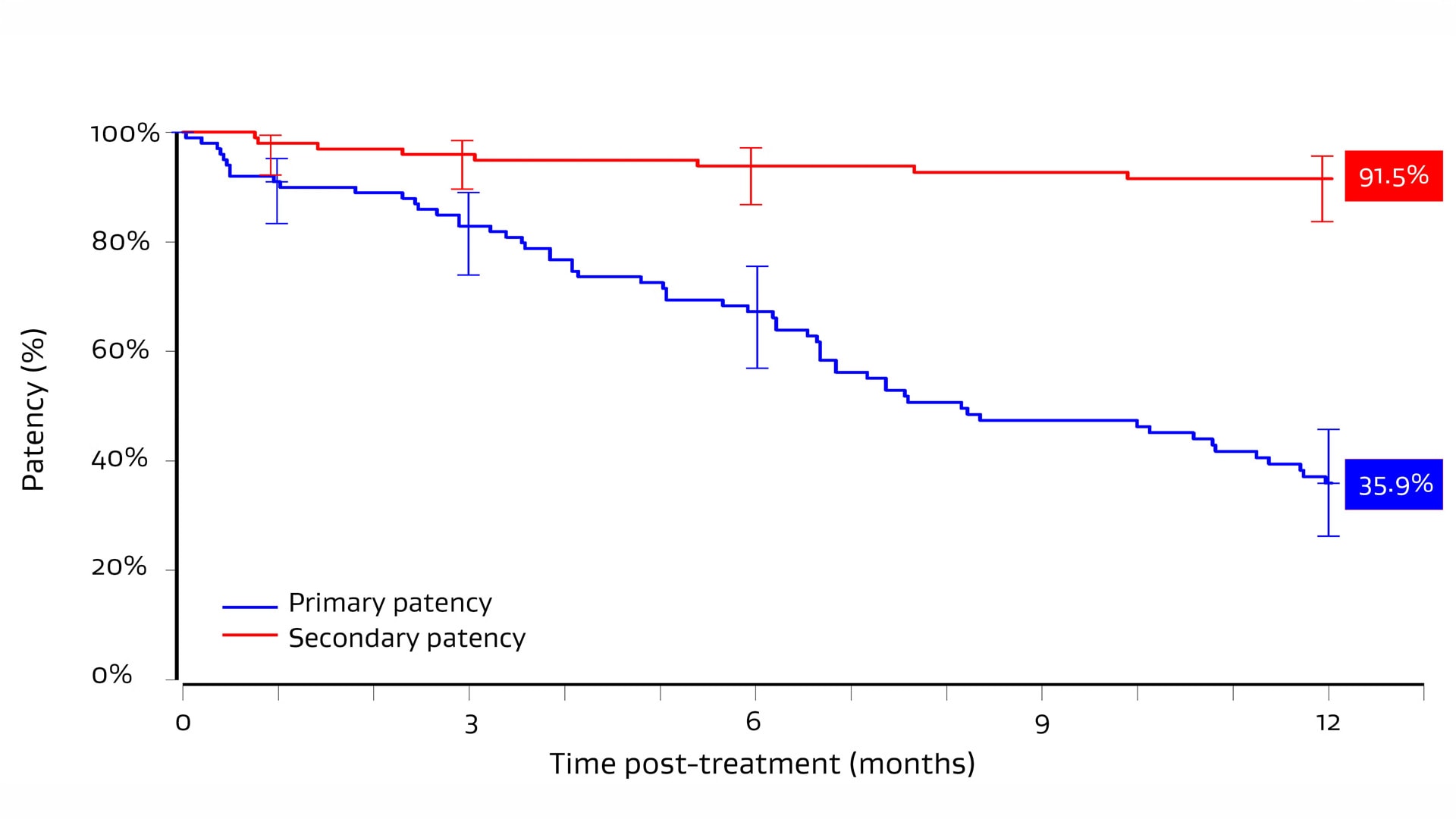
Kaplan-Meier estimates of vascular access circuit primary and secondary patency.
Durable performance at 2 years3
The average number of days to reintervention after VIABAHN® Device placement was >200, no matter the location of the reintervention.3
Secondary patency at the target lesion and access circuit through 2 years3
Primary patency at the target lesion through 2 years3
Primary patency of the access circuit through 2 years3
Takeaways
Two years after placement of the VIABAHN® Device, results demonstrated that the primary driver of access circuit failure shifted from the venous outflow to the intra-AV graft segment, which is characterized as the most frequent location for early restenosis.3
a. As used by Gore, Heparin Bioactive Surface refers to Gore’s proprietary CBAS® Heparin Surface.
b. Also referred to as the GORE® VIABAHN® Endoprosthesis with PROPATEN Bioactive Surface in some regions.
- Haruguchi H, Fukasawa M, Ikeda K, et al. Treatment with a self-expanding endoprosthesis in patients with stenosis or occlusion at the arteriovenous graft: 6-month outcomes of a post-marketing surveillance study. J Vasc Access. 2025;26(6):1829-1837. doi:10.1177/11297298241286249
- Fukasawa M, Haruguchi H. A 1-year follow-up analysis of a post-market surveillance study of a self-expanding endoprosthesis for stenosis or occlusion at the arteriovenous access. J Vasc Access. 2026;27(1):169-175. doi:10.1177/11297298251330951
- Suemitsu K, Miyamoto M, Murakami M. Two-year outcomes of stent graft placement for arteriovenous graft outflow stenosis: patency and patterns of reintervention from a prospective multicenter study. Presented at: Japan Endovascular Treatment Conference; February 6-8, 2026; Tokyo, Japan.

Refer to Instructions for Use at eifu.goremedical.com for a complete description of all applicable indications, warnings, precautions and contraindications for the markets where this product is available. RXOnly
INDICATIONS FOR USE IN THE US: The GORE® VIABAHN® Endoprosthesis with Heparin Bioactive Surface is indicated for improving blood flow in patients with symptomatic peripheral arterial disease in superficial femoral artery de novo and restenotic lesions up to 270 mm in length with reference vessel diameters ranging from 4.0 – 7.5 mm. The GORE® VIABAHN® Endoprosthesis with Heparin Bioactive Surface is indicated for improving blood flow in patients with symptomatic peripheral arterial disease in superficial femoral artery in-stent restenotic lesions up to 270 mm in length with reference vessel diameters ranging from 4.0 – 6.5 mm. The GORE® VIABAHN® Endoprosthesis with Heparin Bioactive Surface is indicated for improving blood flow in patients with symptomatic peripheral arterial disease in iliac artery lesions up to 80 mm in length with reference vessel diameters ranging from 4.0 – 12 mm. The GORE® VIABAHN® Endoprosthesis with Heparin Bioactive Surface is also indicated for the treatment of stenosis or thrombotic occlusion at the venous anastomosis of synthetic arteriovenous (AV) access grafts.
CONTRAINDICATIONS: The GORE® VIABAHN® Endoprosthesis with Heparin Bioactive Surface is contraindicated for non-compliant lesions where full expansion of an angioplasty balloon catheter was not achieved during pre-dilatation, or where lesions cannot be dilated sufficiently to allow passage of the delivery system. Do not use the GORE® VIABAHN® Endoprosthesis with Heparin Bioactive Surface in patients with known hypersensitivity to heparin, including those patients who have had a previous incident of Heparin-Induced Thrombocytopenia (HIT) type II.