
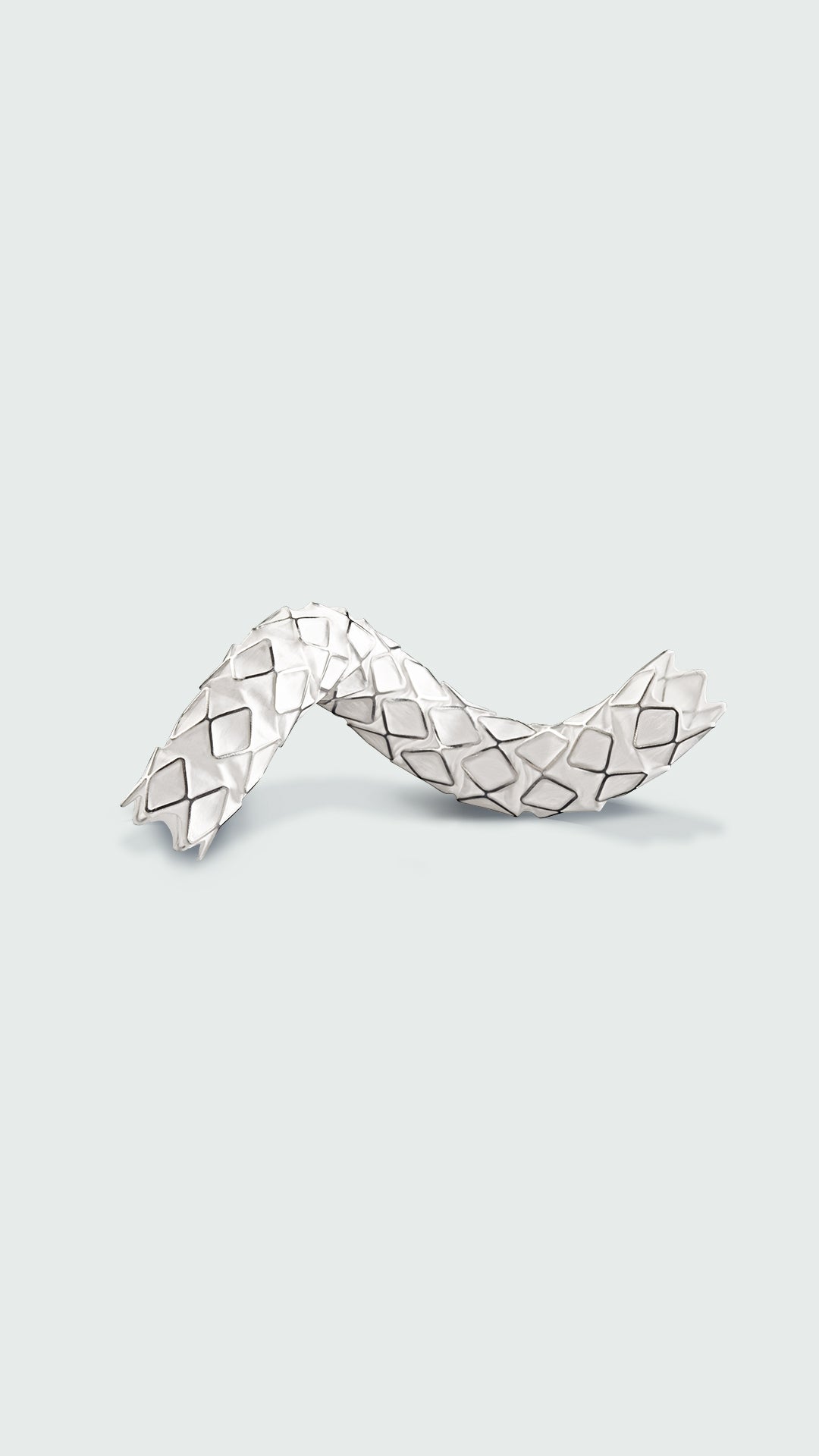
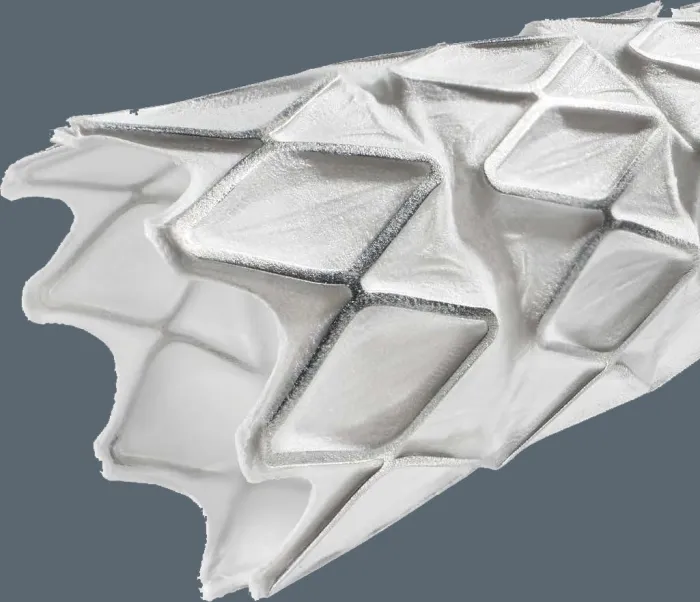
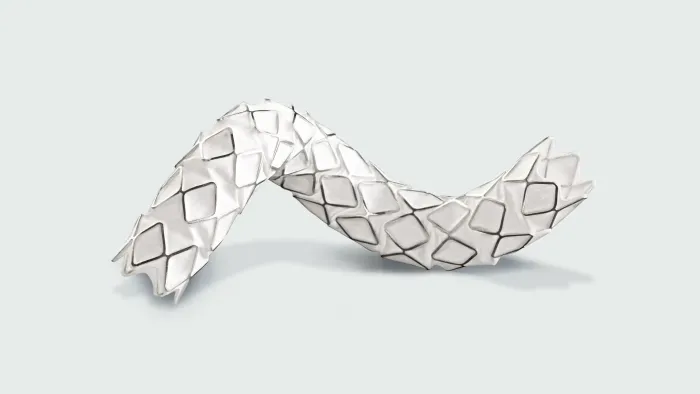
GORE® VIABAHN® VBX Balloon Expandable Endoprosthesis (VBX Stent Graft)
Delivering the flexibility and conformability to perform across anatomies—from routine to complex procedures


234
devices were delivered
received bilaterial treatment
contralateral deliveries and predilation were not required
technical success1,a
1-year outcomes in AIOD
Trusted procedural and clinical performance
primary patency2
primary patency in TASC II C & D lesions3
secondary patency2
5-year outcomes in AIOD
Proven long-term, durable outcomes in physician-initiated 5-year follow-up
of patients improved ≥1 Rutherford category4
primary patency per lesion4
freedom from target lesion revascularization per lesion4
improvement in median Walking Impairment Questionnaire measures
improvement in mean resting ankle brachial index (from .82 to .95) (P < .001)
Having an endovascular solution as provided by the VBX Stent Graft and is demonstrated as being sustained and durable out to 5 years and has comparable, if not better, patency than open surgical options is really powerful.

The difference is in our data. Because data represents more than just numbers.
BROAD INCLUSION
MINIMAL EXCLUSION
Criteria representing real‑world patient demographics

CORE LAB
ANALYZED
Independently validated to increase accuracy and reduce bias

MULTICENTER
REGISTRY DESIGN
Strategically increasing the real-world population being studied
MIX OF COMPLEX
ANEURYSMS
The GORE EMBRACE Registry shows consistently strong clinical results in complex cases
Aneurysm types studied in the EMBRACE Registry 5,6Consistently strong results were seen across a mix of complex aneurysm types | ||
|---|---|---|
FEVAR | BEVAR | |
| TAAA Type I-III | 24% | 61% |
| TAAA Type I-IV | 12% | 24% |
| Pararenal aneurysm | 20% | 11% |
| Juxtarenal aneurysm | 19% | 4% |
| Infrarenal aneurysm | 24% | 0% |
Abbreviation: TAAA, thoracoabdominal aortic aneurysm.
Proven in fenestrated and branched endovascular repair
FEVAR and BEVAR with 1-year and 3-year outcomes5-8
1-year outcomes
Target vessel technical successa
100% FEVAR
99.6% BEVAR
Primary patency | ||
|---|---|---|
1-year outcomes | 3-year outcomes | |
FEVAR | 99.4% | 97.5% |
BEVAR | 98.9% | 94.0% |
Freedom from target vessel instability (fTVI) | ||
|---|---|---|
1-year outcomes | 3-year outcomes | |
FEVAR | 96.6% | 93.9% |
BEVAR | 94.5% | 88.4% |
1-year outcomes
Target vessel technical successa
100% FEVAR
100% BEVAR
Primary patency | ||
|---|---|---|
1-year outcomes | 3-year outcomes | |
FEVAR | 100% | 96.5% |
BEVAR | 96.0% | 93.4% |
Freedom from target vessel instability (fTVI) | ||
|---|---|---|
1-year outcomes | 3-year outcomes | |
FEVAR | 100% | 96.5% |
BEVAR | 96.0% | 92.7% |
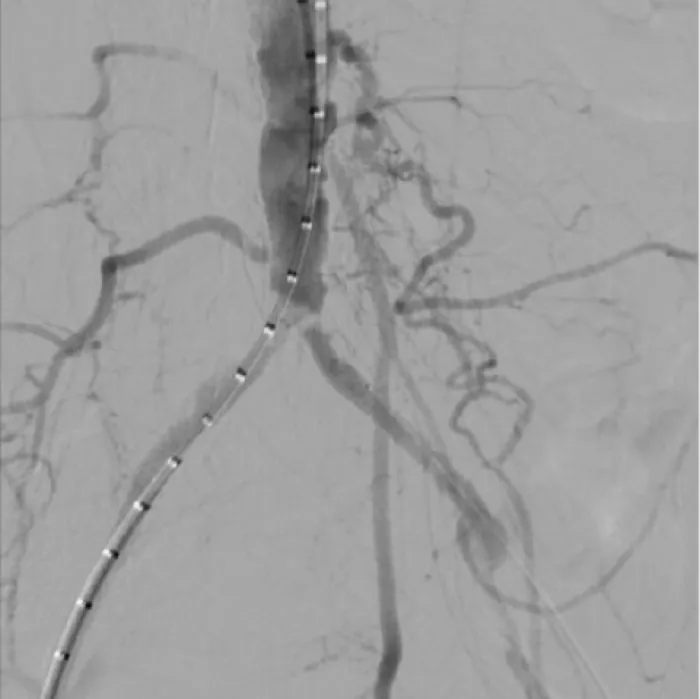
- Based on previously collected clinical data. Evaluation of the reduced-profile delivery system is ongoing.
- Bismuth J, Gray BH, Holden A, Metzger C, Panneton J; VBX FLEX Study Investigators. Pivotal study of a next-generation balloon-expandable stent-graft for treatment of iliac occlusive disease. J Endovasc Ther. 2017;24(5):629-637. doi:10.1177/1526602817720463
- Panneton JM, Bismuth J, Gray BH, Holden A. Three-year follow-up of patients with iliac occlusive disease treated with the VIABAHN Balloon-Expandable Endoprosthesis. J Endovasc Ther. 2020;27(5):728-736. doi:10.1177/1526602820920569
- Data on file. W. L. Gore & Associates; 2020.
- Holden A, Takele E, Hill A, et al. Long-term follow-up of subjects with iliac occlusive disease treated with the VIABAHN VBX Balloon-Expandable Endoprosthesis. J Endovasc Ther. 2025;32(1):68-76. doi:10.1177/15266028231165723
- Real-world data collection of the GORE® VIABAHN® VBX Balloon Expandable Endoprosthesis when used as a bridging stent with branched and fenestrated endografts in the treatment of aortic aneurysms involving the renal-mesenteric arteries (EMBRACE). ClinicalTrials.gov identifier: NCT05143138. Updated September 21, 2026. Accessed September 28, 2026. https://clinicaltrials.gov/study/NCT05143138
- Post-market registry of the GORE® VIABAHN® VBX Balloon Expandable Endoprosthesis implanted in peripheral vessels (EXPAND). ClinicalTrials.gov identifier: NCT03720704. Updated April 14, 2026. Accessed September 28, 2026. https://clinicaltrials.gov/study/NCT03720704
- Usai MV, Gargiulo M, Haulon S, et al. A three-year experience with the balloon expandable GORE VIABAHN VBX in the treatment of thoraco-abdominal aortic aneurysms within the EXPAND trial. J Vasc Surg. 2025;81(2):319-323.e1. doi:10.1016/j.jvs.2024.10.002
- Data on file. W. L. Gore & Associates; 2026. EMBRACE_EXPAND through 3-5yrs.

Refer to Instructions for Use at eifu.goremedical.com for a complete description of all applicable indications, warnings, precautions and contraindications for the markets where this product is available. RXOnly
INDICATIONS FOR USE IN THE US: The GORE® VIABAHN® VBX Balloon Expandable Endoprosthesis is indicated for the treatment of de novo or restenotic lesions found in iliac arteries with reference vessel diameters ranging from 5 mm - 13 mm and lesion lengths up to 110 mm, including lesions at the aortic bifurcation.
The GORE® VIABAHN® VBX Balloon Expandable Endoprosthesis is indicated to maintain visceral artery perfusion as a bridging stent in:
- fenestrated endovascular aortic aneurysm repair with 6-8 mm diameter fenestrations
- branched endovascular aortic aneurysm repair with 6-8 mm diameter branches (e.g. portals, cuffs, or directional branches) that are at least 10 mm in length.
Bridging stent use is limited to aortic endovascular graft systems wherein safety and effectiveness has been demonstrated.
CONTRAINDICATIONS: Do not use the GORE® VIABAHN® VBX Balloon Expandable Endoprosthesis in patients with known hypersensitivity to heparin, including those patients who have had a previous incident of Heparin-Induced Thrombocytopenia (HIT) type II. Patients with known sensitivities or allergies to the GORE® VIABAHN® VBX Balloon Expandable Endoprosthesis materials including expanded polytetrafluoroethylene (ePTFE), fluorinated ethylene propylene (FEP), stainless steel, and heparin.
The GORE® VIABAHN® VBX Balloon Expandable Endoprosthesis is not authorized for use with thoracoabdominal and pararenal branched devices indicated with the GORE® VIABAHN® VBX Balloon Expandable Endoprosthesis as a branch component in Canada.